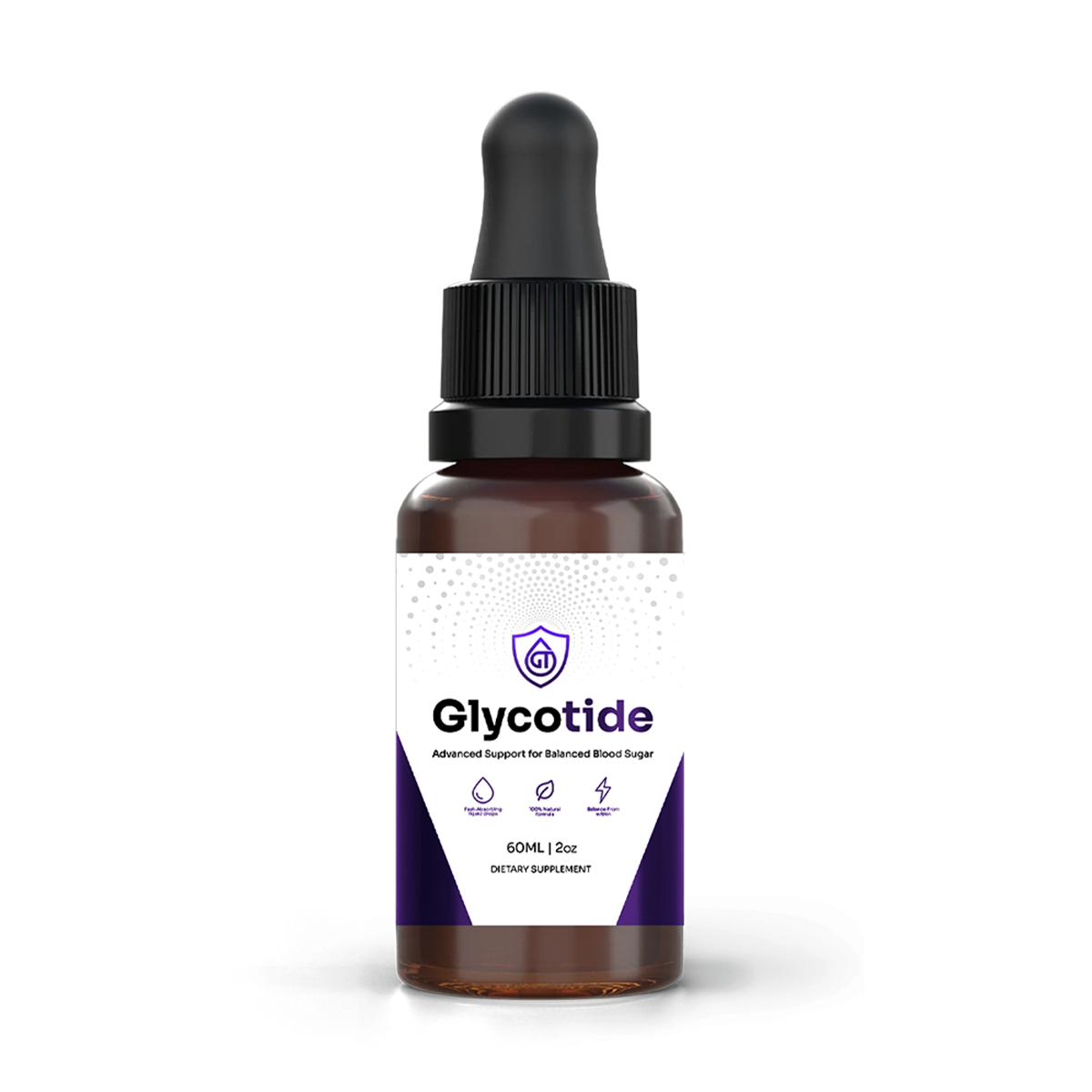
GlycoTide is a liquid supplement taken as drops, marketed for blood sugar balance, steady energy and appetite control. This page is our independent breakdown: what the label actually discloses, why the 200 mg proprietary blend is the central problem, which ingredients interact with diabetes medication, and what it costs per bottle.
Illustrative only — not data from any trial of this product.

These four claims describe how the product is made. They are meaningful for consistency and contamination control — and they say nothing at all about whether the formula works.
Produced domestically rather than imported as a finished good.
The facility is registered with the FDA. This is not the same as the product being FDA-approved — no supplement is.
Good Manufacturing Practice covers batch consistency, cleanliness and record keeping.
Plant extracts and amino acids, stated free from GMOs.
GlycoTide is a liquid dietary supplement sold in dropper bottles. One millilitre daily, taken under the tongue or in water. It combines a disclosed dose of chromium picolinate with a 200 mg proprietary blend of roughly twenty-two botanical extracts and amino acids.
The category it belongs to is blood sugar support — a large and crowded market aimed mainly at adults who have been told their glucose or HbA1c is drifting upward, or who want to reduce sugar cravings and avoid mid-afternoon energy crashes.
The liquid format is the product's main point of differentiation. Sublingual delivery is marketed as faster-absorbing than capsules. That claim holds for some compounds and not others, and it is a smaller advantage than the marketing suggests — we cover why on the how it works page.
Six pathways the formula targets, described in terms of what research on those compounds actually examines — and where the evidence stops.
Chromium is involved in how cells respond to insulin. Trials show effects mainly in people who are chromium deficient or have impaired glucose control — less in those already replete.
Gymnema contains gymnemic acids that temporarily block sweet taste receptors on the tongue. This is real and measurable — though it requires direct contact with the tongue, and the effect is short-lived.
Several plant compounds here are studied for slowing carbohydrate digestion via enzyme inhibition, which would blunt post-meal glucose rises. Evidence is mostly preclinical at these dosages.
Green tea catechins, capsicum and guarana are studied for small increases in energy expenditure. Effect sizes in the literature are modest and dosage-dependent.
African mango and L-glutamine are the relevant ingredients. Both have some research on appetite signalling, though the trials are small and the dosages used are far above blend levels.
Adaptogens (eleuthero, astragalus, Panax ginseng) plus caffeine from guarana. Chronic stress raises glucose, so this is a coherent target — but caffeine cuts both ways for sleep and glucose.
This is the most important section on this page, and it is the one most pages selling this product leave out. Several ingredients in GlycoTide can lower blood glucose on their own. If you already take medication that lowers blood glucose, stacking the two can push you too low.
No dietary supplement replaces prescribed treatment for diabetes. If a page selling a supplement implies you could reduce or come off your medication, close it. Changes to diabetes medication are made by the clinician managing your care, based on your readings — never on the basis of starting a supplement.
Anyone who tests regularly should keep testing while starting something new, and note the date they began so any change can be attributed properly. Tell your doctor what you have started — supplements are one of the most common things people leave off their medication list, and one of the more useful things for a clinician to know.
Further reading: supplements and diabetes medication · our full health disclaimer
This is where GlycoTide's assessment really turns. One ingredient is dosed openly. The other twenty-two share a single undisclosed 200 mg figure.
An essential trace mineral involved in insulin signalling, and the only ingredient here dosed in a unit small enough that a supplement can realistically deliver a research-comparable amount. Meta-analyses show modest effects on fasting glucose, concentrated in people with impaired glucose control rather than those with normal readings. Read the research →
The most relevant botanical in the formula for this purpose. Gymnemic acids temporarily blunt sweet taste, and there is some human research on glucose markers. Note that the taste effect requires contact with the tongue — a point in favour of the sublingual format, if the dose were there. Read the research →
Catechins with research on metabolic rate and fat oxidation. Also the ingredient carrying the clearest safety signal in this formula — concentrated green tea extract has been associated with rare liver injury. Read the research →
Popular in weight management formulas. The supporting trials are small, mostly from a single research group, and have been criticised on methodological grounds. Read the research →
Some evidence for effects on fasting glucose. Note this is aerial extract rather than root — most ginseng research uses root, and the compound profiles differ. Read the research →
A caffeine source included for alertness and thermogenesis. Because the amount is undisclosed, you cannot know your caffeine intake from this product — which matters if you are stimulant-sensitive, have arrhythmia, or take it late in the day. Read the research →
Seven amino acids, all of which are studied at gram-level dosages. At roughly nine milligrams each, these are label ingredients rather than active ones. A single teaspoon of protein powder contains more of most of them.
Ten further ingredients dividing whatever is left of the 200 mg. Several carry interaction warnings out of proportion to any benefit they can deliver at these amounts — the licorice-derived glycyrrhizinate in particular.
Three bundles. Per-bottle cost falls sharply on larger orders, and the 3 and 6-bottle packages ship free within the US. Figures below were accurate at our last check — confirm on the checkout page before ordering.
Rather than publish testimonials we cannot verify, we have grouped the themes that recur in discussion of supplements in this category — including the critical ones.
The most common positive report across blood sugar supplements is a subjective sense of steadier energy rather than a lift. Worth noting the caffeine content here could account for part of that.
Gymnema's sweet-taste suppression is a real, immediate and slightly unusual effect that people do notice — sugary food tastes flat for a while. Sublingual delivery is the right format for it.
A dropper once a day sees better adherence than multi-capsule routines, which matters because any effect here depends on months of consistency.
The most substantive criticism. People who actually test their glucose often report no change in fasting numbers or HbA1c — which, given the blend arithmetic, is not surprising.
A herbal liquid taken sublingually is not pleasant for everyone. Some people also report jitteriness or disturbed sleep, consistent with an undisclosed caffeine dose from guarana.
The informed criticism. Without per-ingredient amounts you cannot compare the formula to research, cannot know your caffeine intake, and cannot assess interaction risk properly.
Larger packages are advertised with downloadable PDF guides. These are marketing materials produced for the funnel, not clinical resources, and the "values" attached to them are not prices anyone pays separately.
General lifestyle material on eating patterns and daily habits around glucose.
A structured short-term programme of dietary and activity changes.
Material on metabolic rate, activity and how the two interact.
Daily routine suggestions plus dosing and timing notes for the product.
The list opposite reflects how GlycoTide is advertised. We have kept the manufacturer's claims intact so you can see them, and graded each against what the evidence supports.
Note the phrasing throughout: "supports", "promotes", "helps maintain". This language is legally required for dietary supplements and is not accidental — a supplement cannot claim to treat, cure or prevent anything, including diabetes.
Partly supported — via chromium only. Chromium has meta-analysed data on fasting glucose in people with impaired control. The botanicals that would support this claim are present at amounts far below their studied ranges.
Plausible for cravings, weak for appetite. Gymnema's sweet-taste suppression is real and works sublingually. The appetite ingredients (African mango, L-glutamine) are far underdosed.
Likely — but check the mechanism. There is caffeine in this formula from guarana. An energy effect may be stimulation rather than glucose stabilisation, and those are different things.
Weakly supported. Green tea and capsicum have small thermogenic effects at research dosages. At blend levels this is unlikely to be measurable.
Not supported by this formula. The relevant ingredients are all present at token amounts. Weight management responds to intake, activity and sleep, not to 9 mg of raspberry ketones.
Likely caffeine. L-tyrosine and GABA are present at trace amounts. Any focus effect is most plausibly attributable to the guarana.
Runs from the original purchase date.
Sixty days from your purchase date. That window matters more than it might appear, because the ingredients here are not acute-acting — any effect on glucose patterns or cravings would take weeks of consistent use to show up, and you need to make a decision before the clock runs out.
Full detail on the refund policy page.
Direct answers to what people actually search before buying.
Primary sources used in assessing the ingredients on this page. These reference the individual compounds — there is no published clinical trial of GlycoTide as a finished product.
Live pricing, stock and any active discount appear on the official checkout page. Every order carries the 60-day money-back guarantee.
Check Current PricePaid link — we earn a commission at no extra cost to you
Ingredient research, honest product analysis and practical guides.
Which common supplement ingredients interact with glucose-lowering drugs, and how to raise it with your doctor.
Read article →Why "200 mg blend" tells you almost nothing, why it is legal, and how to read around it.
Read article →The interventions with the largest evidence base, ranked — before any supplement is worth considering.
Read article →